
Aigrettes
October 25, 2025Elementor #2010
October 26, 2025
Understanding Narrative: Literary Theory and The Jungle Book
As a little girl, I fell in love with the Disney film, The jungle book (1967) by director Wolfgang Reitherman. For this assignment, I re-watched the 1967 version of this film, which I have not seen since I was a child. Through the Wikipedia website (Rudyard Kipling – Wikipedia) I learned that the novel was written in 1894 by English writer, Rudyard Kipling. Kipling was a novelist, poet, journalist, and short-story writer. He was born in British India, which profoundly influenced his work.
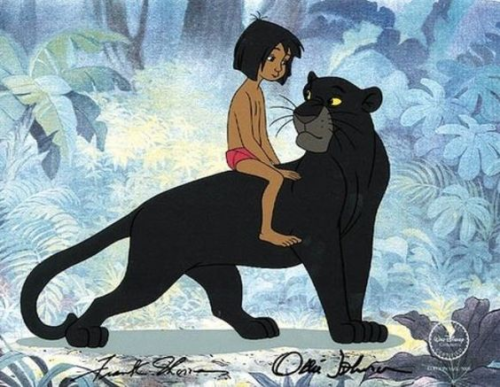
This story begins in the jungles of India, when an orphaned baby is found in a capsized and damaged canoe by Bagheera, a black panther. Bagheera delivers the baby to a pack of wolves who recently had a litter of cubs. Years pass, and the “Man-Cub” named Mowgli, is completely at home in the wild with the animals of the jungle. The Counsel of Wolves decide that Mowgli must be returned to his own kind because the Tiger, Shere Khan, will kill him. This story is about Mowgli’s independent spirit, and the challenges that Bagheera faces in returning Mowgli to the “Man Village”.
While I watched this film, I tried to analyze why I had been so captured by it as a child. I lived with the mother who struggled with serious mental illness. We lived in poverty. I was a very filthy child, who in many ways, was quite feral. Just like Mowgli, I was tall and lanky, with deeply tanned skin. I refused to wear shoes, and so my feet were black with solid calluses. In many ways, I was also an orphan, and I found my companions in nature. I was much more comfortable in nature than I was in my own home. As a little girl, to relate to the Princess archetype, would have been completely out of my range of possibilities. But imagining that I live in the wild with wild animals, was easily conceivable. Just like Mowgli, I did not want to conform to the norms of society. The truth of the matter was, I did not want to live in the “Man Village” either.
Why was I so drawn to this story as a child? Researcher, Mehl-Madrona (2005) in Coyote Wisdom, stated that stories access our brain in ways that help us to move toward self-understanding and support us in positioning ourselves in our own situation. Through engagement with stories, we experience healing (p. 130). “… story reconnects us to our lost or forgotten inner self. It leads to a perception of the path that can lead to transformation. This is how we heal. This is how we overcome adversity and suffering. Whenever we participate in story–hearing or telling–we participate in an opportunity for the growth of the soul” (p. 130).
Mowgli validated my wildness. This story also offered me a sense of belonging and community that had nothing to do with humans, and everything to do with nature. As a child, I was able to recognize and identify with this character. McNicol and Brewster (2018) explored the idea of relatability. When we relate to a character, we see ourselves in their experience and therefore expand our understanding of our options. “In addition to identifying with the character, a reader can project their own emotions or interpretations within the fictional context. Characters with whom a reader identifies may offer templates for possible selves” (p. 27).
In the end, Mowgli chose–on his own–to return to the “Man Village”. He was enticed by a beautiful young girl who was singing, while gathering water, at the river. He saw himself in her, he saw his own kind. As a child, this may have given me hope that I would find my way, my sense of community, my sense of belonging, in a “Man Village” too.
According to Felski (2019), “Characters matter to us and yet are not simply ‘in our minds’; they come to us as if from elsewhere; they possess a degree of solidarity, permanence, and force” (p. 87). All these years later, it appears that Mowgli did offer solidarity to me, as if a messenger of both force and permanence. I believe my experience as a feral child, and perhaps the identification and influence of this film, embedded in my psyche a sense of belonging to nature and to the world that is wild and untamed. I acknowledge and recognize, there is part of me which remains so.
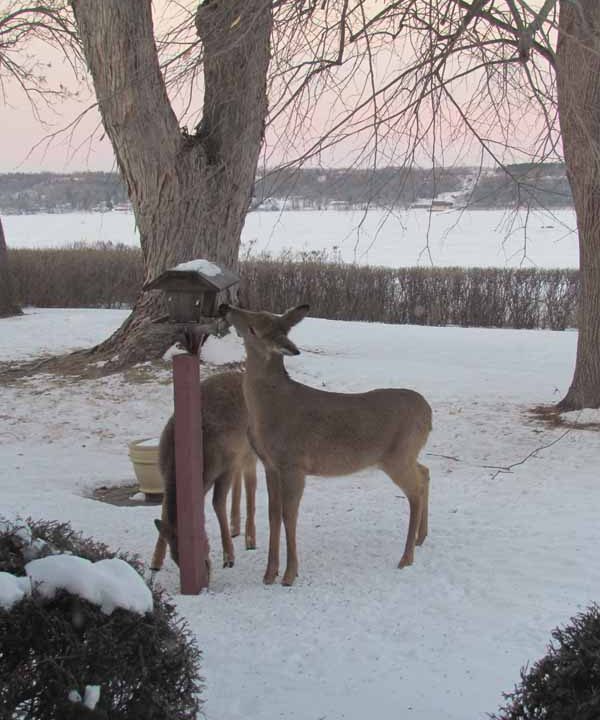
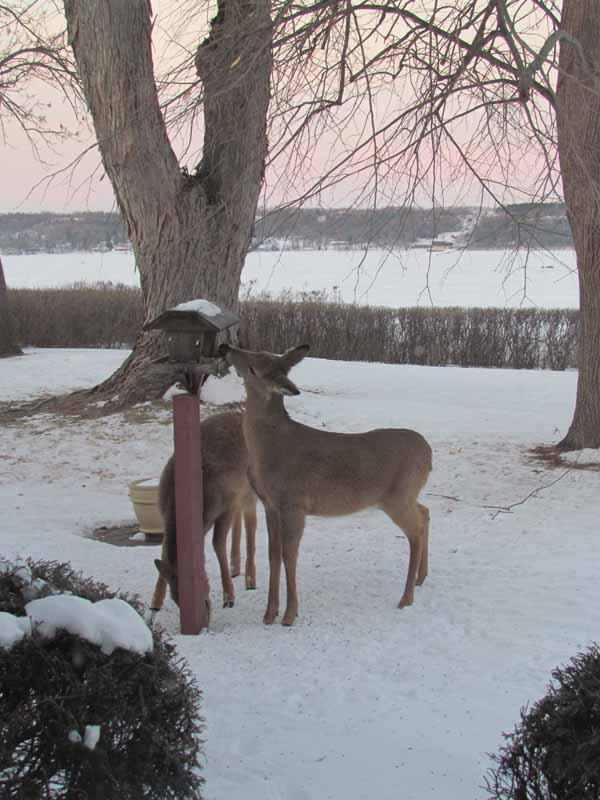
I live in West Central Minnesota on the prairie. Wildness, and the presence of radical nature, are a part of my everyday life. This is where I find God, and my ultimate sense of belonging. I find God in the eyes of the deer who gaze into my own, in the rain clouds that move across the horizon, and in the wind that rustles through the leaves. Nature is an ever-evolving narrative of which I am a part, in which I play a part. It is a narrative in which we write together.
References:
Shared image from The Jungle Book were hand-drawn by Disney animation artists.
Anderson, A., Felski, R., Moi, T. (2019). Character: three inquiries in literary studies. Chicago: The University of Chicago Press.
McNicol, S., & Brewster, L. (Eds.). (2018). Bibliotherapy. London: Facet Publishing. Retrieved from Bibliotherapy (exlibrisgroup.com)
Mehl-Madrona, L. (2005). Coyote wisdom: The power of story in healing. Inner Traditions/Bear & Co.
Reitherman, W. (Director). (1967). The jungle book (Motion picture). Burbank, CA: Disney Films.
Wikipedia. (2023, January 29). Rudyard Kipling. Retrieved from Rudyard Kipling – Wikipedia